Welcome to Phillip’s Mechanical
OPEN MONDAY THROUGH SATURDAY 8 AM TO 5 PM
OPEN MONDAY THROUGH SATURDAY 8 AM TO 5 PM
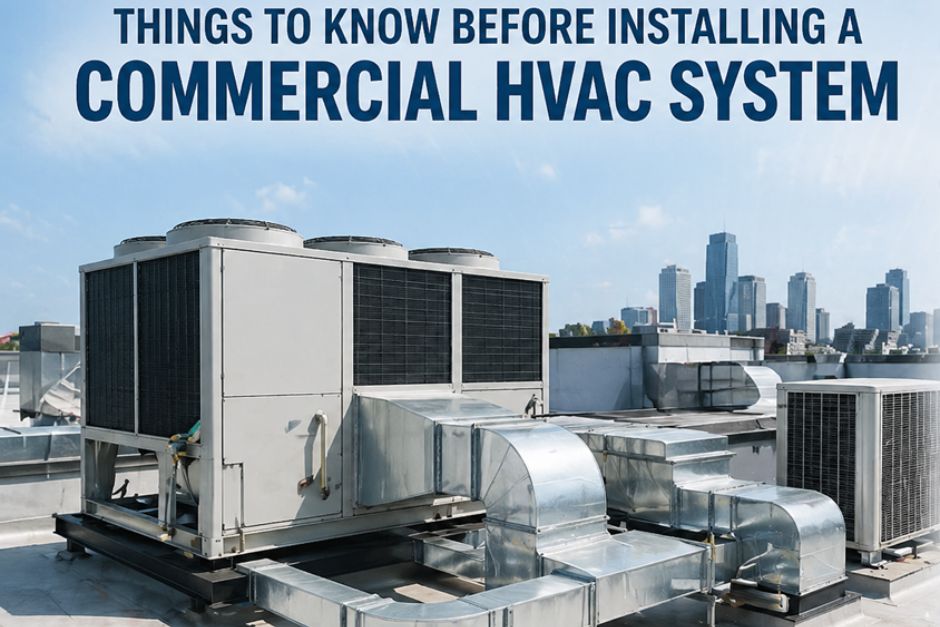
Installing a commercial HVAC system is one of those decisions that seems straightforward at first, but quickly turns into a series of important choices. What size should you pick? How much should you spend? And more importantly, how do you avoid mistakes that cost you later? If you are exploring commercial HVAC installation services, it is worth slowing down and understanding what truly matters before moving forward. This is not just about equipment. It is about getting a system that works quietly in the background without giving you constant trouble.
Table of Contents
Let’s start with a simple question. What exactly does your space need? Not what someone else installed in their building, not what sounds impressive, but what actually works for your setup. A small office with steady occupancy behaves very differently from a busy retail space where doors open constantly and foot traffic never slows down.
This is where many decisions go off track. People jump straight into comparing brands and prices without understanding usage patterns. The smarter approach is to begin with how the space functions on a daily basis and then build the HVAC plan around that reality.
It is easy to assume that a bigger system will perform better, but that is rarely the case. An oversized unit cools or heats too quickly and shuts off before doing the job properly, which leads to uneven temperatures and unnecessary energy use. On the other hand, a system that is too small struggles constantly and wears out faster than expected.
If you are considering Commercial HVAC Services in Central Indiana, make sure the focus is on proper load calculation instead of quick recommendations. Accurate sizing takes into account layout, insulation, occupancy, and even sunlight exposure, and it is one of the most important steps in the entire process.
Here is something that does not get talked about enough. The real cost of an HVAC system is not the installation price. It is what you spend over the next five to ten years.
Energy bills, repair costs, and system efficiency all depend on the decisions made during installation. Cutting corners early often leads to higher expenses later, and by the time the issues show up, fixing them is not always simple.
Think of it this way. A well-planned system quietly does its job without drawing attention, while a poorly planned one keeps reminding you of the mistake.
You could invest in a top-tier HVAC system and still end up with poor performance if the installation is not handled properly. Duct placement, airflow balance, and system positioning all play a huge role in how efficiently the unit operates.
There is a saying in the industry that sums it up well
“Even the best system fails in the wrong hands.”
That might sound blunt, but it highlights an important truth. Installation is not just a step in the process, it is the foundation of everything that follows.
Before finalizing your decision, take a step back and look at the bigger picture. The goal is not just to install a system, but to make sure it works smoothly for years without constant intervention.
If something feels rushed or unclear, it is worth asking more questions. A good setup should feel right, not confusing.
Once the system is installed, the journey is far from over. Maintenance plays a huge role in keeping everything running as expected. Skipping routine checks might seem harmless at first, but it often leads to unexpected breakdowns and higher repair costs.
A well-maintained system performs better, lasts longer, and saves money over time. That is why working with the best HVAC Company in Indiana is not just about installation, but also about long-term support and guidance.
This part often feels tricky because there are so many options out there. Some promise quick installations, while others focus on selling high-end systems.
So how do you decide?
Start by looking for clarity in communication. Are they explaining things in a way that makes sense, or are they using complex terms to rush the process? Do they take time to understand your space, or are they offering solutions within minutes?
The right professional will not pressure you into decisions. Instead, they will walk you through the options and help you understand what works best for your situation.
Yes, and more than most people realize. Uneven temperatures and poor air quality can lead to discomfort, fatigue, and reduced focus, which affects overall performance in the workspace.
Absolutely. Not every high-efficiency system delivers noticeable savings in every setup. The key is matching efficiency levels with actual usage rather than chasing the highest rating.
Improper airflow or duct issues often lead to hot and cold spots, increased energy bills, and unusual system cycling patterns that become noticeable over time.
Yes, blocked vents and restricted airflow can reduce efficiency and create uneven temperature zones, which many people overlook during planning.
In many cases, yes. An incompatible setup can make it difficult to expand or modify the system later, which is why planning ahead is so important.
When you work with Phillip’s Mechanical, you are not stepping into a large operation where your project gets passed around. You are working directly with someone who handles the process with care and attention. That changes how decisions are made and how the work is carried out.
You get straight answers without confusion, and you get solutions that are built around your actual needs. If you are planning your commercial HVAC installation, this is your moment to get it right the first time. Take the time to ask questions, understand your options, and choose a service that values honesty over hype.
Because in the end, a good HVAC system should do one thing really well. It should work without you having to think about it.
July 29, 2026

July 27, 2026