Welcome to Phillip’s Mechanical
OPEN MONDAY THROUGH SATURDAY 8 AM TO 5 PM
OPEN MONDAY THROUGH SATURDAY 8 AM TO 5 PM
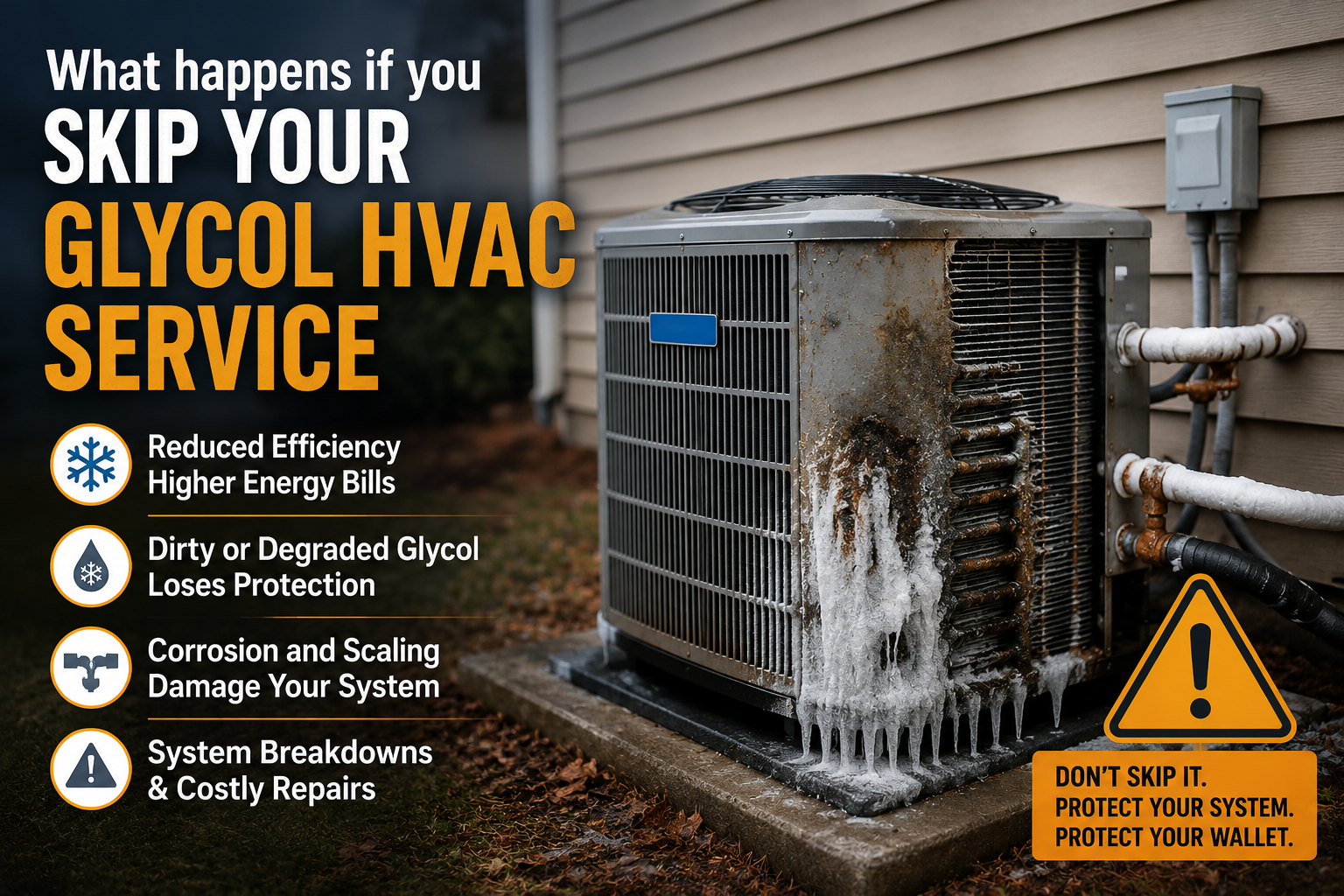
Water expands when it freezes, and that basic law of physics can completely destroy a standard heating system during a brutal winter. Many property owners rely on specialized antifreeze mixtures to protect their pipe networks from bursting under extreme temperatures. Skipping your regular glycol HVAC service in Central Indiana might seem like an easy way to save a quick buck during the mild months, but it creates a silent hazard inside your pipes. Over time, the protective fluid degrades, leaving your expensive climate system completely exposed to sudden drops in temperature and costly internal rust.
Table of Contents
When a building utilizes a specialized fluid mix, it relies on a precise balance of water and antifreeze to keep everything moving smoothly. A proper glycol system installation in Central Indiana requires careful calibration to ensure the liquid can withstand freezing temperatures without becoming too thick for the pumps to push. If you ignore this balance, the fluid slowly breaks down and loses its protective qualities.
What happens to the liquid over time? It becomes highly acidic. When the acid level rises, the fluid stops protecting your system and actively starts attacking the metal surfaces inside your heat exchangers and pipes. This leads to tiny pinhole leaks that are incredibly difficult to locate until major water damage has already occurred.
As the antifreeze mixture ages, it undergoes a chemical change due to continuous exposure to heat and oxygen. This process creates a thick, gooey sludge that settles at the bottom of your pipes and inside the delicate valves of your system.
The consequences of leaving this sludge unaddressed will impact your operational costs immediately:
Investing in consistent glycol system maintenance in Indiana prevents these expensive complications by keeping the fluid clean, balanced, and free of harmful debris. A quick testing process measures the exact freeze protection point and the current acidity levels, allowing for simple corrections before the winter weather arrives.
“A heating loop filled with unmonitored glycol is like an engine running on ancient oil. It might work fine today, but it is quietly eating away at the components from the inside out.”
How do you know if your system is already suffering from neglected fluid? You do not have to wait for a pipe to burst to find out. Your equipment will usually give you a few subtle warnings that the internal chemistry is out of balance.
First, keep an eye on your pressure gauges. If you notice frequent pressure drops, it often means a tiny, acidic leak has formed somewhere in the loop. Second, listen to your pumps. A looping system filled with thick sludge will often make a distinct humming or grinding sound as the motors struggle to push the heavy fluid through the building. Finally, if certain areas of your property suddenly feel drafty or take hours to warm up, a localized fluid blockage is likely stopping the heat from reaching those rooms.
No. Adding plain tap water dilutes the antifreeze concentration, which dangerously raises the freezing point of your system. Even worse, tap water introduces minerals like calcium and magnesium, which react with the glycol to create heavy scale buildup inside your pipes, ruining your efficiency.
A sweet, burnt smell is a major warning sign that your glycol is overheating and breaking down into harmful organic acids. This usually happens when fluid flow slows down, causing the liquid to bake inside the heat exchanger, which requires immediate flushing to prevent severe corrosion.
When glycol degrades, it forms an insulating slime layer inside the heat exchanger coils. Your system might still hit the target temperature, but it has to run up to forty percent longer to push heat through that slime layer, causing a massive spike in your monthly power bills.
Absolutely not. Different brands use completely different inhibitor packages, such as automotive silicates versus heavy-duty industrial phosphates. Mixing them can cause the chemicals to react negatively, causing the protective additives to drop out of the liquid as solid flakes that instantly clog your valves.
An automatic refill tank will continuously pump water or pre-mixed fluid into your system to keep the pressure steady when a leak occurs. Because the pressure stays normal, you will have no idea that thousands of gallons of acidic fluid are slowly leaking into your building structure until the drywall rots out.
I have spent over thirty years fixing mechanical systems across this region, and I have seen firsthand how quickly a neglected fluid loop can ruin an otherwise perfect piece of equipment. My focus is always on giving you straight answers and practical fixes instead of pushing corporate packages you do not need. When I look at your system, I treat it with the care and precision that comes from decades of true field experience. If you want to make sure your heating setup is actually ready to handle the upcoming seasonal shifts without any nasty surprises, reach out to me at Phillip’s Mechanical today, and let us get your system running perfectly.

July 29, 2026

June 28, 2026